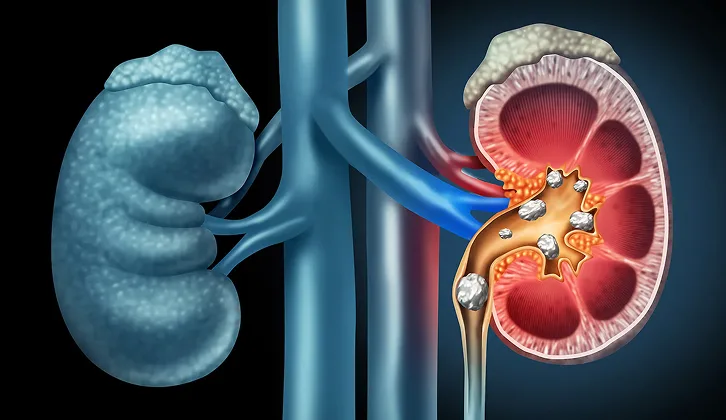
If you have been diagnosed with a kidney stone and told you need a procedure, you may have come across the terms RIRS and PCNL.
Both are minimally invasive laser procedures. Neither involves open surgery. Both are performed at Urocare Hospital in Gondia. But they work differently - and the right choice depends on your stone.
This article explains exactly what each procedure involves, who it is suitable for, and what you can expect.
What They Have in Common
Both RIRS and PCNL:
- Use laser technology to break kidney stones
- Avoid open surgery completely
- Are performed under anaesthesia with Dr. Dhanshree monitoring your safety
- Result in short hospital stays - typically 1–2 days
- Are performed at Urocare using the 35W Thulium Fiber Laser
RIRS - Retrograde Intrarenal Surgery
RIRS uses a thin, flexible laser scope that is passed through the body's natural urinary opening - up through the bladder and into the kidney itself. No cut is made anywhere on the body.
Once the scope reaches the stone, the Thulium Fiber Laser breaks it into fine dust. This dust either passes out naturally with urine or is removed using a small basket instrument.
Who it is right for:
- Stones inside the kidney, up to approximately 2 cm
- Patients who want no cuts or external wounds of any kind
- Patients with complex stone anatomy where PCNL access is difficult
- Patients preferring the shortest recovery time
What to expect:
- Procedure time: 45–90 minutes typically
- Hospital stay: 1–2 days
- No external wounds
- A temporary DJ stent may be placed for 2–4 weeks after the procedure
- Return to light activity: from day of discharge in most cases
Key Advantage of RIRS
Completely scarless. Performed entirely through the natural urinary passage. Most patients go home the next day.
PCNL - Percutaneous Nephrolithotomy
PCNL involves making a small keyhole opening - approximately 1 cm - in the skin over the back or flank, directly into the kidney. A telescope is then passed through this opening and the stone is broken and removed using laser or ultrasonic energy.
Who it is right for:
- Large stones - typically above 2 cm
- Complex staghorn or branching stones that fill the entire kidney
- Stones in a part of the kidney that the flexible scope cannot reach
- Stones that have not responded to previous RIRS
What to expect:
- Procedure time: 60–120 minutes typically
- Hospital stay: 2–3 days
- One small wound in the back - usually closed with a single stitch
- A nephrostomy tube may remain in place for 1–2 days after
- Return to light activity: within 1 week typically
Key Advantage of PCNL
Allows complete clearance of large or complex stones in a single procedure. Despite the small opening, it remains vastly less invasive than traditional open stone surgery.
Side-by-Side Comparison
| RIRS | PCNL | |
|---|---|---|
| Best for | Stones up to ~2 cm | Stones above 2 cm |
| External cuts | None | 1 small keyhole (~1 cm) |
| Hospital stay | 1–2 days | 2–3 days |
| Anaesthesia | Spinal / regional | Spinal / regional |
| Recovery | Very fast | Fast |
| Stone clearance | Excellent for small–medium | Excellent for large/complex |
| Scar | None | Minimal (small keyhole) |
What If I Need Both?
In some cases - particularly with large or multiple stones - Dr. Amit may recommend a staged approach: PCNL first to remove the bulk of the stone, followed by RIRS to clear residual fragments. He will explain the full plan clearly at your consultation.
What About URSL?
URSL (Ureteroscopic Stone Lithotripsy) is a third laser procedure used specifically for stones that are stuck in the ureter - the tube between the kidney and bladder. If your stone has already dropped into the ureter, URSL is typically the preferred approach rather than RIRS or PCNL.
The Technology at Urocare
Both RIRS and PCNL at Urocare are performed using the 35W Thulium Fiber Laser by Intercardia Life Sciences - the most advanced system in its category currently available in this region.
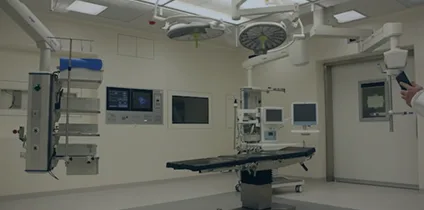
The operating theatre is equipped with Karl Storz endoscopic instruments from Germany - the same equipment used at India's top urology centres.
Does It Matter Where You Have the Surgery?
Yes - significantly. RIRS and PCNL require an experienced endourologist, precision laser equipment, and reliable anaesthetic support. Outcomes, complication rates, and stone clearance rates are directly linked to surgical experience and technology.
Dr. Amit has performed over 1,000 laser stone surgeries at Urocare. The 35W Thulium Fiber Laser is available on-site. Dr. Dhanshree is in-house as anaesthesiologist and intensivist for every procedure.