If you have an enlarged prostate and your doctor has told you that surgery may be needed, you may have heard two terms - TURP and ThuLEP.
Both procedures treat benign prostatic hyperplasia (BPH) - the medical term for an enlarged prostate that blocks urinary flow. Both are performed without open surgery. But they are not the same procedure - and in many cases, the choice between them matters for your outcome.
This article explains both clearly, compares them honestly, and helps you understand what to ask your doctor.
Why Does the Prostate Cause Urinary Problems?
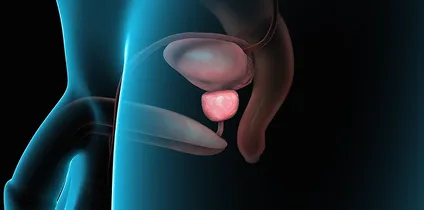
The prostate gland sits directly below the bladder in men, wrapped around the urethra - the tube that carries urine out of the body. As men age, the prostate often grows larger. When it does, it squeezes the urethra and makes it harder to pass urine normally.
Symptoms of BPH include:
- Weak or slow urine stream
- Difficulty starting urination
- Waking up multiple times at night to urinate
- Feeling that the bladder does not fully empty
- Urgency - a sudden, strong need to urinate
- Dribbling at the end of urination
When symptoms become severe - or when the bladder is no longer emptying properly - surgery is often the best long-term solution.
TURP - Transurethral Resection of the Prostate
TURP is the traditional surgical treatment for enlarged prostate and has been the standard of care for decades. A telescope is passed through the urethra and an electrical loop shaves away the obstructing prostate tissue piece by piece, opening up the urinary channel.
Who it is right for:
- Moderate prostate enlargement
- Patients where ThuLEP is not available
- Patients with standard prostate sizes
What to expect:
- Performed through the natural urinary opening - no external cuts
- Hospital stay: 2–3 days
- A urinary catheter remains in place for 1–2 days after surgery
- Improvement in urine flow: usually within days
- Some bleeding during and after surgery is expected
Key Consideration for TURP
In TURP, the prostate tissue is cut and removed in pieces. For larger prostates, this can result in more bleeding and a longer operative time. There is also a small but recognised risk of TUR syndrome (absorption of irrigation fluid), which is mostly avoided with modern bipolar TURP systems.
ThuLEP - Thulium Laser Enucleation of the Prostate
ThuLEP is a newer, laser-based procedure that represents a significant advancement over TURP for many patients. Using the Thulium Fiber Laser, the entire obstructing prostate lobe is separated from its capsule and pushed into the bladder, where it is then morcellated (broken into small pieces) and removed.
This technique removes the complete obstructing tissue - not just part of it - which is why the results tend to be more durable.
Who it is right for:
- All prostate sizes - including very large prostates above 80–100 grams where TURP is less effective
- Patients on blood thinners (anticoagulants) - ThuLEP has significantly less bleeding
- Patients wanting the best long-term functional outcome
- Patients who want the most thorough removal of obstructing tissue
What to expect:
- Performed through the natural urinary opening - no external cuts
- Hospital stay: 1–2 days (shorter than TURP in most cases)
- Catheter removed sooner
- Very low bleeding - suitable for patients on anticoagulants
- Excellent long-term results with lower retreatment rates
Key Advantage of ThuLEP
ThuLEP removes the obstructing tissue more completely than TURP. Studies consistently show lower retreatment rates - meaning patients are less likely to need a repeat procedure years later. For large prostates, ThuLEP is considered superior to TURP by most current urological guidelines.
Side-by-Side Comparison
| TURP | ThuLEP | |
|---|---|---|
| Best for | Moderate prostate size | All sizes, including large |
| Technique | Electrical resection (shaving) | Laser enucleation (complete lobe removal) |
| Bleeding | More | Minimal |
| Hospital stay | 2–3 days | 1–2 days |
| Suitable for blood thinners | With caution | Yes |
| Long-term retreatment rate | Higher | Lower |
| External cuts | None | None |
| Available in Gondia | Yes, at Urocare | Yes, at Urocare |
Which Procedure Does Dr. Amit Recommend?
For most patients with moderate to large prostate enlargement who need surgery, ThuLEP provides better long-term results - particularly for larger prostates and patients on blood thinners.
However, the right decision depends on your specific prostate size, symptoms, age, general health, and medications. Dr. Amit will recommend the most appropriate procedure after reviewing your ultrasound, uroflowmetry, and clinical assessment.
If you have been advised TURP elsewhere and your prostate is large, it is worth asking whether ThuLEP is an option.
Do I Definitely Need Surgery?
Not all BPH patients need surgery. Mild to moderate symptoms can often be managed with medication and lifestyle changes. Surgery is typically recommended when:
- Symptoms are severe and significantly affecting quality of life
- The bladder is no longer emptying properly (high post-void residual)
- Urinary retention has occurred
- Recurrent infections or bladder stones have developed as a result of obstruction
- Medication has not provided adequate relief
Dr. Amit will assess your symptoms and investigations before recommending any surgical approach.