"Laser surgery" is one of those phrases that sounds modern without actually telling you what happens. Patients hear it and picture something from a science fiction film - a beam cutting through tissue at a distance.
The reality is more precise, more practical, and considerably less dramatic. But also genuinely better than what it replaced.
Here is what laser urology actually is, what it treats, and what you experience as a patient.
What "Laser Urology" Actually Means
Laser urology refers to a family of procedures in which a laser fibre - thinner than a pencil lead - is passed through a small flexible or rigid scope into the urinary tract. The laser delivers precise pulses of energy directly to the target tissue.
There is no incision. No external cut. The scope enters through the body's natural openings - the urethra - and travels up to wherever the problem is: the ureter, the kidney, or the prostate.
What the laser does depends on what it is aimed at:
- At a kidney stone - it shatters it into dust
- At enlarged prostate tissue - it enucleates or vaporises the excess tissue blocking the urethra
- At a urethral stricture - it can incise the scar tissue
Urocare Hospital uses the 35W Thulium Fiber Laser - a next-generation system that outperforms the older Holmium:YAG laser on stone dusting efficiency, precision, and reduced retropulsion. It is the same technology used in India's top urology centres.
The Two Main Conditions Laser Treats at Urocare
1. Kidney Stones
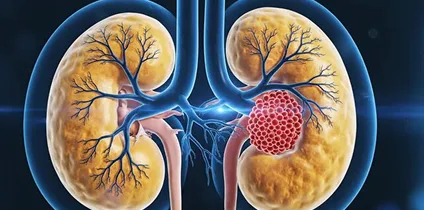
- RIRS (Retrograde Intrarenal Surgery) - for stones inside the kidney or upper ureter, typically under 20 mm. The flexible scope enters through the urethra, passes the bladder, and navigates into the kidney. Laser breaks the stone into fine powder. No cuts anywhere.
- URS / Ureteroscopy - for stones in the ureter. A rigid or semi-rigid scope is passed up the ureter. The laser breaks the stone, and fragments are retrieved or allowed to pass naturally.
- PCNL (Percutaneous Nephrolithotomy) - for large stones over 20–25 mm. A small 1 cm puncture is made in the back, and a scope with a laser fibre breaks the stone from inside. This single puncture replaces what was previously a large open surgery.
2. Enlarged Prostate (BPH)
- ThuLEP (Thulium Laser Enucleation of the Prostate) - the gold standard. The laser separates the enlarged inner prostate from its capsule, like an orange removed from its peel. The result is a permanent, wide-open urethra. No cuts. Hospital stay typically 1–2 days.
- ThuVAP / Vaporisation - for smaller prostates. The laser evaporates the obstructing tissue directly. Shorter procedure time, suitable for smaller glands.
What Happens Before the Procedure
- Initial OPD visit - imaging (ultrasound or CT scan for stones; uroflowmetry and ultrasound for prostate) is reviewed or ordered
- Pre-operative assessment - blood work, ECG, anaesthesia fitness reviewed by Dr. Dhanshree Ilamkar, Urocare's in-house anaesthesiologist
- Consent and briefing - Dr. Amit explains the procedure, anaesthesia, and recovery in plain terms
Most patients are admitted the morning of surgery. Fasting from the night before is required.
What Recovery Looks Like
This is where laser genuinely changes the patient experience versus older open surgery:
Stone procedures (RIRS/URS): Hospital stay 1 night in most cases. A ureteric stent is sometimes placed and removed at 2–4 weeks in OPD. Back to normal activity in 3–5 days.
ThuLEP for prostate: Hospital stay 1–2 nights. Urethral catheter removed within 24–48 hours. Most patients notice immediate improvement in flow. Back to normal activity in 1–2 weeks.
There is no wound to clean. No dressing changes. No stitches to remove. The most common post-procedure symptom is mild burning or frequency on urination for a few days - this settles on its own.
Why This Matters for Patients in Gondia
Until recently, a patient in Gondia with a large kidney stone or a prostate blocking their flow had two options: manage it with medication and hope, or travel to Nagpur or Pune and spend 2–3 weeks away from home.
Urocare Hospital changed that. The Thulium Fiber Laser, Karl Storz endoscopy equipment, and an in-house anaesthesiologist in Gondia mean that procedures previously unavailable here are now routine.
If you have a CT scan, ultrasound, or uroflow report - bring it to OPD. Dr. Amit will tell you plainly whether laser is right for your case, and what to expect.