Local Guide · Choosing a Urologist
How to Choose the Best Urologist in Gondia
What to Look For Before You Book
Urology is a surgical speciality. The difference between a good and a mediocre outcome often comes down to the surgeon's training and the technology available. Here is what actually matters — and what to ask before you commit to a procedure.
1. Check the Qualification — Not Just the Degree
In India, a urologist should have an MCh (Urology) or DrNB (Urosurgery) — a three-year super-speciality degree after an MS in Surgery. Some practitioners offer urology services with only an MS in General Surgery or even less. That is not the same.
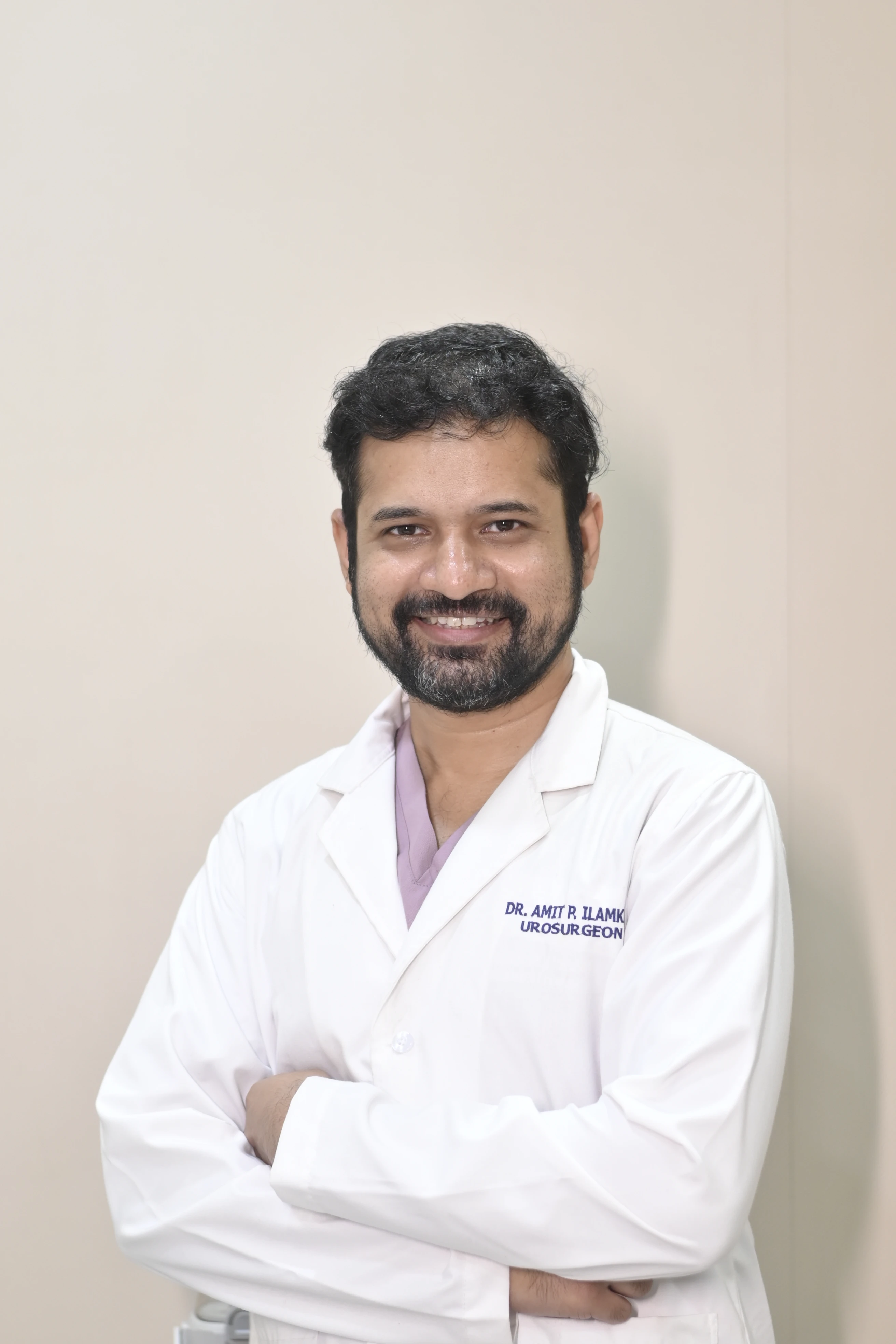
DrNB Urosurgery (Dr. Amit's qualification) is the National Board equivalent of MCh Urology — a rigorous three-year programme at a recognised urology centre. Dr. Amit trained at Lilavati Hospital, Mumbai, one of India's leading private urology units.
2. Does the Hospital Have the Right Equipment?
Most urology procedures in 2025 should not require open surgery. Ask specifically whether the hospital has:
- Flexible ureteroscope (for RIRS — kidney stone laser surgery)
- Holmium or Thulium laser system
- C-arm fluoroscopy (for PCNL and stent placement)
- Dedicated urology OT — not shared general surgery table
Urocare Hospital Gondia has all four in-house. This matters because when equipment needs to be borrowed or rented, procedure timings get pushed back, and sterilisation protocols may not be consistent.
3. Who Gives the Anaesthesia?
In smaller hospitals, anaesthesia is often handled by a visiting anaesthesiologist — meaning if there is a complication, they may not be immediately available post-operatively. At Urocare Hospital, Dr. Dhanshree Ilamkar (MD Anaesthesia) is the in-house Medical Director and is present for every procedure and available 24×7. That is a meaningful safety advantage for any patient with co-morbidities.
4. Ask About Procedure Volume
Surgical outcomes improve significantly with volume. A surgeon doing 5 RIRS procedures a month and one doing 50 are not equivalent — even if both are technically trained. Ask directly: how many procedures of this type do you do per month?
Dr. Amit has performed 5,000+ urological procedures since completing his training, with a sub-speciality focus on endourology (kidney stone surgery) and laser prostate surgery.
5. Is Nagpur or Mumbai Actually Necessary?
Many patients from Gondia, Bhandara, and Balaghat are referred to Nagpur or Mumbai under the assumption that these cities offer better care for urology. In some cases that was historically true — but it is no longer automatic.
If the procedure you need is RIRS, PCNL, ThuLEP, TURP, or standard reconstructive urology — these are available at Urocare Hospital Gondia with the same laser systems and a surgeon trained at a Mumbai centre. You save the travel cost, hotel stay, and the stress of managing a post-op recovery away from home.
Questions to Ask Any Urologist Before Surgery
- What is your qualification in urology specifically?
- How many procedures like mine have you done in the last 12 months?
- Is this hospital equipped for this procedure or will anything be rented in?
- Who is the anaesthesiologist and will they be available post-op?
- What is the complication rate for this procedure at your centre?
- Will I be discharged same day, or do I need to plan for a stay?
Book a Consultation with Dr. Amit
Get a direct answer on whether your condition needs surgery, which procedure fits best, and what it will cost — no referral needed.