Three Years of the Wrong Treatment
For three years, this patient urinated in a thin, weak stream — barely a trickle. He was going to the bathroom constantly, day and night, and each time his bladder never felt fully empty.
He was not ignoring it. He had visited four clinics and hospitals before he reached Urocare. At each one, they dilated his urethra — stretched it open with metal instruments — hoping the problem would go away. When it came back, they did it again. Then again.
It always came back.
By the time he arrived at Dr. Amit Ilamkar's clinic in Gondia, his body had a suprapubic catheter — a tube inserted directly into his bladder through his abdomen — just to allow urine to drain at all. His urethra had essentially closed.
What the Imaging Showed

A retrograde urethrogram (RGU) — an X-ray taken while contrast dye is pushed through the urethra — told the story clearly.
The stricture was not in one spot. It ran the entire length of the anterior urethra, from the tip of the penis all the way to the bulbomembranous junction at the base. Twelve to fourteen centimetres of scarred, narrowed, diseased tissue.
It was pan-urethral — the worst kind.
Cystoscopy confirmed it: the urethral opening was so narrow the scope could barely pass. More than sixty percent of the urethral mucosa was unhealthy tissue — scarred, stiff, unable to expand.
Why This Needed Surgery — Not Another Dilatation
Every dilatation this patient had received had made things worse. Dilatation and VIU (Visual Internal Urethrotomy) work for short, simple, first-time strictures. The published success rate for VIU drops below 20% when strictures are over 2 cm long or have recurred. For a 12–14 cm pan-urethral stricture with a history of repeated failures, repeating the same procedure would be medically unjustifiable.
The only definitive treatment was urethroplasty — open surgical reconstruction of the urethra itself.
The patient's main concern was not the surgery itself — it was whether he was medically fit to undergo it. Once that was confirmed, he was fully cooperative and committed to moving forward.
Why Buccal Mucosa
When a urethra is too damaged to simply be cut and rejoined, the surgeon must use tissue from elsewhere in the body to reconstruct it.
Buccal mucosa — the lining from inside the cheeks — is the gold standard for urethral grafting. It is the same type of wet, flexible epithelial tissue as the urethra. It adapts to a wet environment naturally, integrates reliably, and heals quickly. The patient can eat and drink within hours of surgery.
Critically: there is no visible donor site. No scar anyone will ever see.
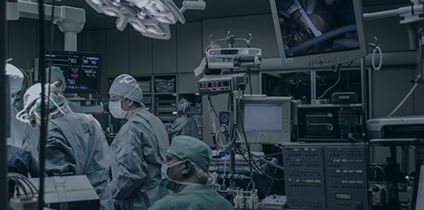
The Surgery: Five Hours

This case required two types of anaesthesia — a fact that illustrates its complexity.
Dr. Dhanshree Ilamkar, Urocare's Medical Director and in-house anaesthesiologist, administered spinal anaesthesia for the perineal and penile surgical phase. Then, when it came time to harvest the buccal mucosa from inside the patient's mouth, she transitioned to general anaesthesia — securing the airway precisely to ensure no blood from the harvest site would be aspirated into the lungs. After harvesting, she managed the patient back from general while the surgical team completed the reconstruction below.
This dual-anaesthesia coordination is one of the reasons complex urethroplasty can be performed at Urocare without transfer to a tertiary centre.
The surgical sequence
- Cystoscopy confirmed the full extent of the stricture
- Perineal incision was made; the penis was degloved to expose the full urethral length
- Dense adhesions were encountered — layers of scar tissue from infections and repeated surgeries had bonded structures together, significantly extending operative time
- The urethra was opened along its length; over 60% of the mucosal lining was unhealthy tissue
- Buccal mucosa was harvested from both cheeks — approximately 7 cm per side, 14 cm total
- The graft was applied as a ventral onlay — laid along the underside of the opened urethra from the tip of the penis to the membranous urethra
- A 14Fr silicone catheter was placed to support healing
Recovery
- Eating resumed within 6 hours of surgery completing
- Mobile and walking within 24 hours
- ICU monitoring for first 24 hours — standard for dual-anaesthesia cases
- 4-day hospital stay, pain-free throughout
- Suprapubic catheter removed at 3 weeks
- Urethral catheter removed at 4 weeks
When the catheter came out, he urinated freely — a strong, unobstructed stream — for the first time in three years. At follow-up, flow measurements were satisfactory and he had resumed normal sexual activity with good erectile function.
Dr. Amit rated the outcome 9 out of 10.
The Bigger Picture
Dr. Amit Ilamkar has performed over 100 urethroplasties. His personal success rate with BMG urethroplasty mirrors the published literature from high-volume centres: approximately 90% long-term success in experienced hands. The national average across all surgeons sits at 60–70%, heavily influenced by stricture length, prior surgical history, and comorbidities.
This case — a 12–14 cm pan-urethral stricture, dense intraoperative scarring, dual anaesthesia — pushed the difficulty ceiling. It was completed successfully in Gondia.
"There is nothing that cannot be taken care of in urology at a three-tier city like Gondia."
— Dr. Amit Prakash Ilamkar, DrNB Urosurgery
Clinical details published with patient consent. Patient identity not disclosed. Urethrogram images anonymised.