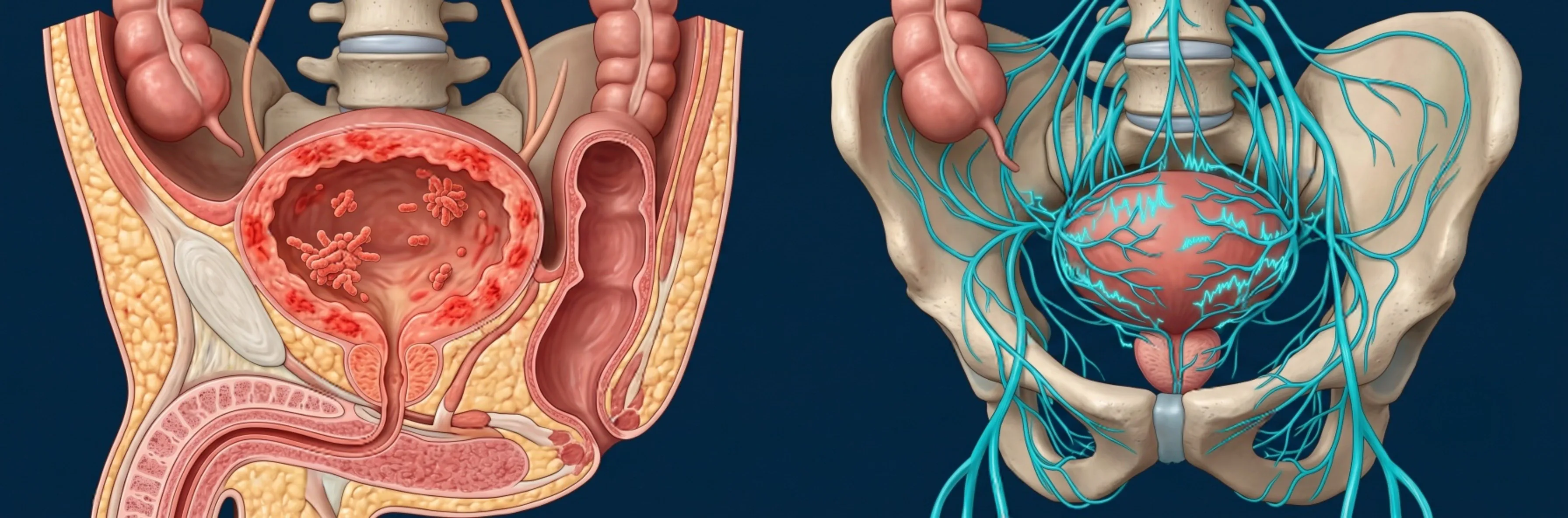
Frequent urination, urgency, and that sudden desperate need to rush to the bathroom. These symptoms are shared by two very different conditions. One is an infection. The other is a nerve and muscle problem. Treating the wrong one not only fails. It can make things worse.
The key symptoms compared
| Symptom | Overactive Bladder (OAB) | UTI |
|---|---|---|
| Frequent urination | Yes (8+ times/day) | Yes |
| Sudden strong urge | Yes, defining feature | Yes, but less severe |
| Burning or pain when urinating | No | Yes, defining feature |
| Cloudy or smelly urine | No | Often yes |
| Blood in urine | Rare | Can occur |
| Fever or chills | No | Possible (kidney infection) |
| Waking at night to urinate | Yes (nocturia) | Sometimes |
| Duration | Months to years | Days |
| Urine culture | Negative (no bacteria) | Positive (bacteria found) |
What is overactive bladder?
Overactive bladder (OAB) is not an infection. It is a disorder of bladder muscle control. The detrusor muscle (the bladder wall muscle responsible for squeezing urine out) contracts involuntarily, creating an urgent and often uncontrollable need to urinate, even when the bladder contains very little urine.
OAB affects approximately 1 in 6 adults over 40. It is more common in women but affects men too, particularly those with BPH. Common triggers include:
- Caffeine and carbonated drinks
- Alcohol
- Constipation (a full rectum presses on the bladder)
- Nerve conditions: diabetes, multiple sclerosis, Parkinson's disease, stroke
- Pelvic floor weakness (especially after childbirth)
- Anxiety, the brain-bladder link is real and measurable
What is a UTI?
A urinary tract infection is a bacterial infection, most commonly E. coli, in the urethra, bladder, or kidney. It causes inflammation, which triggers the same urgency and frequency symptoms as OAB, but with the addition of pain, burning, and often discoloured urine.
UTIs are confirmed by a urine culture, not a dipstick test alone. A dipstick showing nitrites and leucocytes is suggestive, but a culture identifies the exact bacteria and its antibiotic sensitivity. Treating a presumed UTI without a positive culture is a common and avoidable mistake, especially in older women where OAB symptoms are frequently misdiagnosed as recurrent UTIs.
Why misdiagnosis is common, and harmful
Many women with OAB are prescribed repeated courses of antibiotics for "recurrent UTIs" when their urine cultures are actually negative or show only contaminant bacteria. This leads to:
- Antibiotic resistance, the bacteria in the gut become resistant to standard antibiotics
- Disruption of the normal urinary and vaginal microbiome
- No improvement in bladder symptoms, because the underlying OAB is never treated
- Months or years of unnecessary medication
The simple rule: do not treat for UTI without a urine culture that confirms bacterial infection.
Diagnosing OAB
OAB is diagnosed clinically, there is no single definitive test. A urologist will:
- Take a detailed bladder diary (how often you urinate, volumes, urgency episodes)
- Send a urine culture to rule out infection
- Check a post-void residual (how much urine remains after urinating)
- In complex cases, perform urodynamic testing, a pressure-flow study of how the bladder fills and empties
Treating overactive bladder
OAB treatment starts with behaviour, not medication:
- Bladder training: gradually extending the intervals between bathroom visits, retraining the brain-bladder signal
- Fluid management: drinking 1.5–2 litres/day in regular intervals, not large amounts at once
- Dietary changes: reducing caffeine, alcohol, and acidic foods that irritate the bladder
- Pelvic floor exercises: strengthening pelvic muscles to support bladder control
When behaviour changes are insufficient, medications are added:
- Anticholinergics (oxybutynin, solifenacin), reduce bladder muscle contractions. Side effects include dry mouth and constipation.
- Beta-3 agonists (mirabegron), relax the bladder during filling. Better tolerated than anticholinergics, especially in older patients.
For severe OAB that does not respond to medication, Botox injection into the bladder muscle (done via cystoscopy) and neuromodulation procedures are available.
Bottom line: If you have had more than two "UTIs" in the past year, ask for a urine culture each time before accepting antibiotics. If the cultures keep coming back negative or mixed, the problem is likely OAB, and it responds well to treatment once correctly identified.